Discover the Lenormand Deck
36 cards, each with a unique story. Tap any card to explore its meaning.

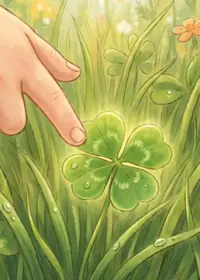

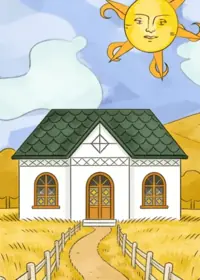
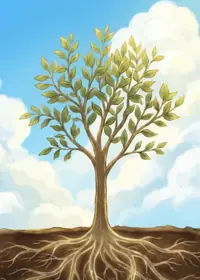
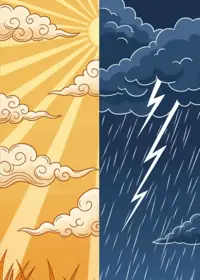


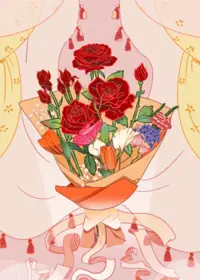
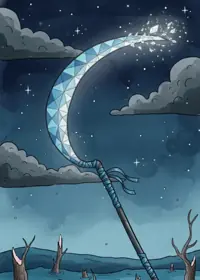
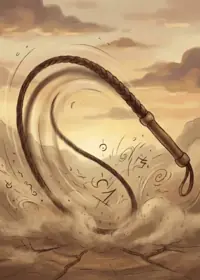
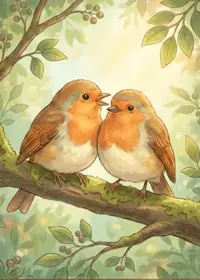



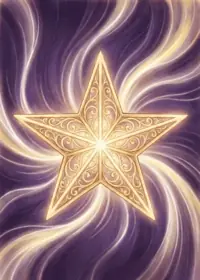


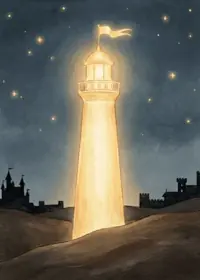
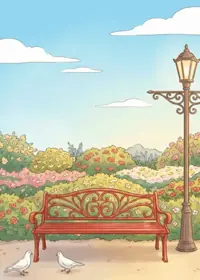

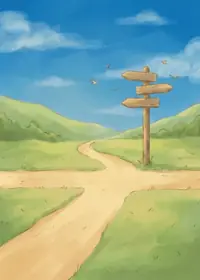





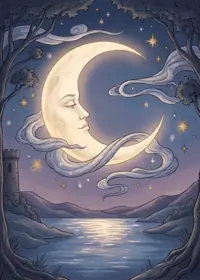
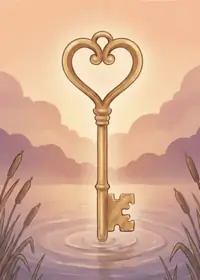
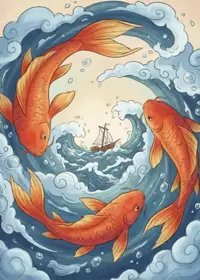
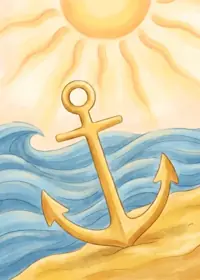

One card. One revelation. One minute.
Draw Your Lucky Card of the DayYou're Not Alone in This
Thousands have asked the same questions. Here's how we listen differently.
I only get things done when I’m afraid of the consequences, and it’s ruining my life. How do I fix this?
✨I only get things done when I’m afraid of the consequences, and it’s ruining my life. How do I fix this?
%22%2F%3E%3Ctext%20x%3D%2240%22%20y%3D%2240%22%20text-anchor%3D%22middle%22%20dominant-baseline%3D%22central%22%20fill%3D%22white%22%20font-family%3D%22system-ui%2Csans-serif%22%20font-size%3D%2232%22%20font-weight%3D%22600%22%3EO%3C%2Ftext%3E%3C%2Fsvg%3E)
This question feels bigger than its surface wording, because it is really asking how to understand yourself more honestly. People often get stuck when they wait for one perfect explanation instead of looking for the pattern under the pain, fear, or confusion. Try to stay close to what is concrete, emotionally true, and actually changeable from where you are now. Clarity usually comes through steadier contact with reality, not through one dramatic answer.
You want a clean interpretation because uncertainty looks bad up close. Most real answers are messier than the question that summoned them. There is probably a pattern here. There is also probably some avoidance.
What placements in a birth chart can indicate intense attraction or hyperfixation in relationships?
✨What placements in a birth chart can indicate intense attraction or hyperfixation in relationships?
%22%2F%3E%3Ctext%20x%3D%2240%22%20y%3D%2240%22%20text-anchor%3D%22middle%22%20dominant-baseline%3D%22central%22%20fill%3D%22white%22%20font-family%3D%22system-ui%2Csans-serif%22%20font-size%3D%2232%22%20font-weight%3D%22600%22%3ER%3C%2Ftext%3E%3C%2Fsvg%3E)
Questions like this usually show up when a relationship is carrying more emotional weight than it seems to on the surface. Whether the issue is attraction, commitment, trust, or confusion, the deeper need is often clarity about what this connection is waking up inside you. If you can look a little past the immediate intensity, you may start to see the fear, longing, or unmet need underneath it. That is often where the truest answer begins.
This is probably not just about the other person, which is inconvenient for you. Relationships are excellent at exposing patterns you hoped would stay theoretical. Intensity is not intimacy and confusion is not depth. Try not to romanticize what destabilizes you.
Feeling Lost in Love?
✨I just need some clarity about where this is going...
%22%2F%3E%3Ctext%20x%3D%2240%22%20y%3D%2240%22%20text-anchor%3D%22middle%22%20dominant-baseline%3D%22central%22%20fill%3D%22white%22%20font-family%3D%22system-ui%2Csans-serif%22%20font-size%3D%2232%22%20font-weight%3D%22600%22%3EL%3C%2Ftext%3E%3C%2Fsvg%3E)
Your birth pattern holds unique answers. FluxAstro connects your cosmic alignment to your specific situation.
Follow your heart and trust the process.
What Does the Future Hold?
✨I feel like something big is about to change but I don't know what...
%22%2F%3E%3Ctext%20x%3D%2240%22%20y%3D%2240%22%20text-anchor%3D%22middle%22%20dominant-baseline%3D%22central%22%20fill%3D%22white%22%20font-family%3D%22system-ui%2Csans-serif%22%20font-size%3D%2232%22%20font-weight%3D%22600%22%3EA%3C%2Ftext%3E%3C%2Fsvg%3E)
The Lenormand cards reveal specific patterns in your near future — not vague predictions, but actionable insights tied to your birth chart.
Stay positive and good things will come your way.
Is This the Right Person for Me?
✨We're great together sometimes, but other times I wonder if we're really compatible...
%22%2F%3E%3Ctext%20x%3D%2240%22%20y%3D%2240%22%20text-anchor%3D%22middle%22%20dominant-baseline%3D%22central%22%20fill%3D%22white%22%20font-family%3D%22system-ui%2Csans-serif%22%20font-size%3D%2232%22%20font-weight%3D%22600%22%3ES%3C%2Ftext%3E%3C%2Fsvg%3E)
Your Twelve Palaces compatibility reading reveals the deep dynamics between you — beyond surface-level sun sign matching.
Check your zodiac compatibility. Some signs just work better together.
In my darkest moments, I asked for a sign… and something always responded
✨In my darkest moments, I asked for a sign… and something always responded
%22%2F%3E%3Ctext%20x%3D%2240%22%20y%3D%2240%22%20text-anchor%3D%22middle%22%20dominant-baseline%3D%22central%22%20fill%3D%22white%22%20font-family%3D%22system-ui%2Csans-serif%22%20font-size%3D%2232%22%20font-weight%3D%22600%22%3ES%3C%2Ftext%3E%3C%2Fsvg%3E)
This feels like grief looking for somewhere soft to land, and that matters more than getting the wording perfectly right. When loss is this close, people often reach for spirituality because ordinary language can no longer hold the love and the pain at the same time. If a spiritual frame brings comfort, closeness, or a little steadiness, you do not need to defend that. What matters most right now is gentleness, support, and not having to carry this sorrow by yourself.
Loss makes people reach for symbols because plain language collapses fast. Use spirituality if it helps. Just do not confuse longing with evidence. Grief can make almost anything feel sacred.
Nobody talks about how lonely the self-improvement journey can feel
✨Nobody talks about how lonely the self-improvement journey can feel
%22%2F%3E%3Ctext%20x%3D%2240%22%20y%3D%2240%22%20text-anchor%3D%22middle%22%20dominant-baseline%3D%22central%22%20fill%3D%22white%22%20font-family%3D%22system-ui%2Csans-serif%22%20font-size%3D%2232%22%20font-weight%3D%22600%22%3EE%3C%2Ftext%3E%3C%2Fsvg%3E)
This sounds less like personal failure and more like a long stretch of feeling unseen, unchosen, or out of place. Loneliness gets much heavier when it starts sounding like identity instead of experience. The way back is usually not dramatic, it is often one safe and repeatable point of contact built slowly over time. Belonging tends to come back through consistency long before it comes back through certainty.
You are not uniquely doomed, just underconnected and overattached to what that means about you. Belonging rarely arrives like revelation. It usually shows up after repeated effort, which is dull and irritating. Still counts.
How do you deal with wanting to do a lot but doing very little?
✨How do you deal with wanting to do a lot but doing very little?
%22%2F%3E%3Ctext%20x%3D%2240%22%20y%3D%2240%22%20text-anchor%3D%22middle%22%20dominant-baseline%3D%22central%22%20fill%3D%22white%22%20font-family%3D%22system-ui%2Csans-serif%22%20font-size%3D%2232%22%20font-weight%3D%22600%22%3EP%3C%2Ftext%3E%3C%2Fsvg%3E)
This sounds less like a moral failure and more like a loop that keeps grabbing you when you are tired, lonely, or overloaded. Addiction gets louder when it becomes the easiest place to put discomfort, even if only for a few minutes. Try making the habit a little harder to reach and the next tiny alternative a little easier, instead of demanding a total rebirth from yourself overnight. You need more steadiness and less self-punishment.
You keep feeding the loop and then acting shocked that it survives. Addiction loves convenience, loneliness, and easy access, so modern life is basically a gift basket. You do not need another dramatic promise. You need fewer openings and less sentimentality about relapse.
Can someone find jobs that suit them well based on their astrology?
✨Can someone find jobs that suit them well based on their astrology?
%22%2F%3E%3Ctext%20x%3D%2240%22%20y%3D%2240%22%20text-anchor%3D%22middle%22%20dominant-baseline%3D%22central%22%20fill%3D%22white%22%20font-family%3D%22system-ui%2Csans-serif%22%20font-size%3D%2232%22%20font-weight%3D%22600%22%3ES%3C%2Ftext%3E%3C%2Fsvg%3E)
What you are really asking is not just what to do, but where your energy can make sense again. A lot of confusion around work and direction comes from trying to live a life that looks functional but feels emotionally mismatched. Start by noticing which environments make you feel useful, awake, and a little less split inside, because that usually matters more than prestige. Direction often gets clearer when fit becomes more important than performance.
You want a clean answer about what fits, like your life is a matching quiz. It is not. Fit matters, but so do stamina, friction tolerance, and whether you can keep going when the feeling leaves. Direction is usually less mystical and more repetitive than people want.
I think I’m a female narcissist and it’s ruining my relationship
✨I think I’m a female narcissist and it’s ruining my relationship
%22%2F%3E%3Ctext%20x%3D%2240%22%20y%3D%2240%22%20text-anchor%3D%22middle%22%20dominant-baseline%3D%22central%22%20fill%3D%22white%22%20font-family%3D%22system-ui%2Csans-serif%22%20font-size%3D%2232%22%20font-weight%3D%22600%22%3EL%3C%2Ftext%3E%3C%2Fsvg%3E)
The fact that you can name the harm directly matters, because honesty is where real repair begins. Shame by itself will only keep you circling, but accountability, structure, and support can actually change what happens next. If someone else was hurt, the gentlest and strongest thing you can do now is build a life where repetition becomes less possible. You do not need to prove you are good right away, you need to become safer and more truthful over time.
Naming it clearly is the first useful thing you have done. Insight without structure is just theater. If harm happened, safety matters more than your self-image. Guilt is noisy. Change is harder.
Why am I always EXTREAMLY tired?
✨Why am I always EXTREAMLY tired?
%22%2F%3E%3Ctext%20x%3D%2240%22%20y%3D%2240%22%20text-anchor%3D%22middle%22%20dominant-baseline%3D%22central%22%20fill%3D%22white%22%20font-family%3D%22system-ui%2Csans-serif%22%20font-size%3D%2232%22%20font-weight%3D%22600%22%3EI%3C%2Ftext%3E%3C%2Fsvg%3E)
This reads much more like an overwhelmed nervous system than a character flaw. When your energy keeps disappearing or your mind keeps stalling, the problem is often exhaustion, fear, depression, or pressure that has piled up too long. Try making the next action so small it feels safe, while also checking the basics like sleep, stress, movement, and stimulation. You probably do not need harsher discipline first, you need more stability and a little more mercy.
You keep calling it laziness because that sounds simpler than admitting your system is fried. When your brain keeps stalling, motivation is usually not the missing ingredient. Stop waiting to feel ready. Readiness has become one of your prettier excuses.
I heard Tarot doesn’t tell timeline, but I think it can. What’s your experience?
✨I heard Tarot doesn’t tell timeline, but I think it can. What’s your experience?
%22%2F%3E%3Ctext%20x%3D%2240%22%20y%3D%2240%22%20text-anchor%3D%22middle%22%20dominant-baseline%3D%22central%22%20fill%3D%22white%22%20font-family%3D%22system-ui%2Csans-serif%22%20font-size%3D%2232%22%20font-weight%3D%22600%22%3EP%3C%2Ftext%3E%3C%2Fsvg%3E)
Tarot tends to help most when it gives shape to something you already feel but cannot yet organize. A card is useful not because it traps fate in place, but because it reveals the emotional pattern or tension underneath the moment. If a reading is truly helping you, it should leave you feeling more honest and a little more held, not more helpless. That is usually where insight separates from projection.
Tarot is excellent at turning ambiguity into confidence. A card can be signal, projection, pattern, or performance, and people rarely know which one they are using. Meaning sticks when it lands on a bruise. That is why the deck keeps getting away with so much.
Where can I actually meet decent people without the bar scene
✨Where can I actually meet decent people without the bar scene
%22%2F%3E%3Ctext%20x%3D%2240%22%20y%3D%2240%22%20text-anchor%3D%22middle%22%20dominant-baseline%3D%22central%22%20fill%3D%22white%22%20font-family%3D%22system-ui%2Csans-serif%22%20font-size%3D%2232%22%20font-weight%3D%22600%22%3EP%3C%2Ftext%3E%3C%2Fsvg%3E)
This reads much more like an overwhelmed nervous system than a character flaw. When your energy keeps disappearing or your mind keeps stalling, the problem is often exhaustion, fear, depression, or pressure that has piled up too long. Try making the next action so small it feels safe, while also checking the basics like sleep, stress, movement, and stimulation. You probably do not need harsher discipline first, you need more stability and a little more mercy.
You keep calling it laziness because that sounds simpler than admitting your system is fried. When your brain keeps stalling, motivation is usually not the missing ingredient. Stop waiting to feel ready. Readiness has become one of your prettier excuses.
I only get things done when I’m afraid of the consequences, and it’s ruining my life. How do I fix this?
✨I only get things done when I’m afraid of the consequences, and it’s ruining my life. How do I fix this?
This question feels bigger than its surface wording, because it is really asking how to understand yourself more honestly. People often get stuck when they wait for one perfect explanation instead of looking for the pattern under the pain, fear, or confusion. Try to stay close to what is concrete, emotionally true, and actually changeable from where you are now. Clarity usually comes through steadier contact with reality, not through one dramatic answer.
You want a clean interpretation because uncertainty looks bad up close. Most real answers are messier than the question that summoned them. There is probably a pattern here. There is also probably some avoidance.
What placements in a birth chart can indicate intense attraction or hyperfixation in relationships?
✨What placements in a birth chart can indicate intense attraction or hyperfixation in relationships?
Questions like this usually show up when a relationship is carrying more emotional weight than it seems to on the surface. Whether the issue is attraction, commitment, trust, or confusion, the deeper need is often clarity about what this connection is waking up inside you. If you can look a little past the immediate intensity, you may start to see the fear, longing, or unmet need underneath it. That is often where the truest answer begins.
This is probably not just about the other person, which is inconvenient for you. Relationships are excellent at exposing patterns you hoped would stay theoretical. Intensity is not intimacy and confusion is not depth. Try not to romanticize what destabilizes you.
Feeling Lost in Love?
✨I just need some clarity about where this is going...
Your birth pattern holds unique answers. FluxAstro connects your cosmic alignment to your specific situation.
Follow your heart and trust the process.
What Does the Future Hold?
✨I feel like something big is about to change but I don't know what...
The Lenormand cards reveal specific patterns in your near future — not vague predictions, but actionable insights tied to your birth chart.
Stay positive and good things will come your way.
✨ Share what's on your mind — we're here to listen
Explore Lenormand Insights
Discover guidance for love, career, wealth, and every life question through the wisdom of Lenormand cards.
Love & Relationships
Will he come back? Does he love me? Get answers to your heart's deepest questions.
Explore →Career & Success
Job changes, promotions, business decisions — find clarity for your professional path.
Explore →Wealth & Prosperity
Financial decisions, investments, abundance — discover what the cards reveal about your fortune.
Explore →Health & Wellness
Physical vitality, inner peace, emotional balance — guidance for your well-being journey.
Explore →Life Purpose
What is my life purpose? What's blocking me? Find answers to your soul's deepest questions.
Explore →Card Spreads
Learn powerful Lenormand spreads and discover what card combinations reveal.
Explore →Explore Lenormand with FluxAstro – Your Minimalist Astrology Companion
Discover your inner energy and receive a personalized monthly guidance.
Everything you need for daily spiritual clarity
Discover powerful tools designed to guide your journey
Your spiritual journey in 3 steps
Download the App
Get FluxAstro from the App Store or Google Play and create your account in seconds.
Explore Features
Discover daily energy readings, cosmic chat, meditation, and card spreads.
Grow & Reflect
Track your journey, gain insights, and evolve with personalized spiritual guidance.
Loved by thousands of seekers
"FluxAstro has completely transformed my daily routine. The energy readings are incredibly accurate and help me navigate my day with confidence."
Sarah Chen
Wellness Coach
Why Choose FluxAstro: Spirit Guide & Rhythm?
In a world full of noise and uncertainty, finding moments of clarity can feel impossible. FluxAstro: Spirit Guide & Rhythm is your daily companion for spiritual guidance, combining ancient wisdom with modern AI technology to help you navigate life's biggest questions.
Whether you're going through a major life transition, seeking direction in your career, or simply wanting to understand your emotions better, FluxAstro offers a safe space for reflection and discovery. Our AI-powered guidance is designed to be supportive, thoughtful, and always focused on your well-being.
What Makes FluxAstro Different
Unlike traditional astrology apps that give generic horoscopes, FluxAstro provides personalized insights based on your unique profile and current life context. Our AI cosmic chat feature lets you ask specific questions and receive reflective guidance tailored to your situation.
We believe spiritual guidance should be practical, not prescriptive. FluxAstro doesn't tell you what to do — it helps you find your own answers through thoughtful reflection and time-tested wisdom frameworks.
How AI Spiritual Guidance Works
Our AI combines multiple wisdom traditions — including astrology, numerology, and tarot/Lenormand symbolism — with advanced natural language processing to provide meaningful, context-aware guidance.
Every interaction is designed for self-reflection, not dependency. The goal isn't to replace your intuition, but to amplify it with fresh perspectives and gentle prompts for deeper thinking.
All conversations are private and encrypted. Your spiritual journey is personal, and we respect that deeply.
Who Uses FluxAstro
FluxAstro is designed for anyone seeking clarity and calm in their daily life:
- •Professionals managing work-life balance and career decisions
- •Individuals exploring their spiritual path for the first time
- •People going through major life transitions (breakups, moves, career changes)
- •Anyone who wants a moment of reflection in an otherwise busy day
- •Those seeking emotional support without judgment
Our users range from complete beginners to experienced spiritual practitioners. The app adapts to your level of interest and engagement.
Start Your Journey Today
FluxAstro is free to download and use. The free tier includes daily energy readings, limited AI chat sessions, and basic meditation tracks. FluxAstro Plus subscription unlocks unlimited chat, premium meditation content, and deeper personalized insights.
Join 10,000+ seekers who start their day with FluxAstro. Download now and discover what daily spiritual clarity feels like.
Frequently Asked Questions
What is FluxAstro:Spirit Guide & Rhythm?
What is FluxAstro:Spirit Guide & Rhythm?
FluxAstro is an AI-powered spiritual guidance app that offers daily energy readings, cosmic chat conversations, meditation tools, and Lenormand card readings. It's designed for self-reflection and personal clarity, not definitive predictions.
Is FluxAstro free to use?
Is FluxAstro free to use?
Yes! FluxAstro offers a free tier with core features including daily energy readings and 5 AI chat sessions per week. FluxAstro Plus subscription ($4.99/month or $39.99/year) unlocks unlimited chat, premium meditation tracks, and advanced insights.
How does the AI cosmic chat work?
How does the AI cosmic chat work?
Our AI combines spiritual wisdom frameworks with contextual understanding to provide reflective, supportive guidance. You can ask about love, career, emotions, or life decisions. The AI responds thoughtfully — like talking to a wise, compassionate friend.
Is my data private?
Is my data private?
Absolutely. Your readings, chat history, and personal information are encrypted and never shared with third parties. We don't sell data or use it for advertising. See our Privacy Policy for complete details.
Which platforms is FluxAstro available on?
Which platforms is FluxAstro available on?
FluxAstro is available on both iOS (App Store) and Android (Google Play). Your account and data sync seamlessly across devices, so you can switch between phone and tablet without losing progress.
Is this a replacement for therapy?
Is this a replacement for therapy?
No. FluxAstro is designed for guidance and self-reflection purposes only. It's not a substitute for professional mental health care. If you're struggling with serious emotional or psychological issues, please consult a qualified therapist.
Still have questions?